
China Best Emergency Shutdown Actuator Manufacturers?

Time:2026-10-07 Author:Madeline
0%

Choosing the best Emergency Shutdown Actuator manufacturers in China requires more than comparing prices or factory photos. These devices protect valves, pipelines, and process equipment during dangerous operating conditions. A dependable supplier must understand shutdown logic, fail-safe movement, torque requirements, and site-specific risks.

This guide examines Chinese manufacturers through practical engineering criteria. It considers product design, actuator response time, enclosure protection, corrosion resistance, testing procedures, and documentation quality. Factory experience also matters. A manufacturer with proven oil, gas, chemical, power, or water-treatment projects usually understands real installation challenges better than a purely sales-driven supplier.

Details matter.

A strong supplier should provide traceable materials, clear performance curves, wiring diagrams, inspection records, and responsive technical support. Certifications can support credibility, but certificates alone cannot prove reliable field performance. Factory audits, sample testing, customer references, and communication during customization offer stronger evidence. Questions about spring-return performance, manual override safety, hazardous-area suitability, and maintenance intervals should receive precise answers.

No shortlist is flawless. Some published specifications remain incomplete, while some capable factories communicate poorly in English. That weakness deserves attention, not automatic rejection. Buyers should verify claims through drawings, test reports, and witnessed inspections. A thoughtful comparison can reveal whether a manufacturer offers genuine engineering support or simply presents attractive catalog language. The final choice should match the valve, process conditions, emergency philosophy, and long-term maintenance plan. Reliability is built through evidence.
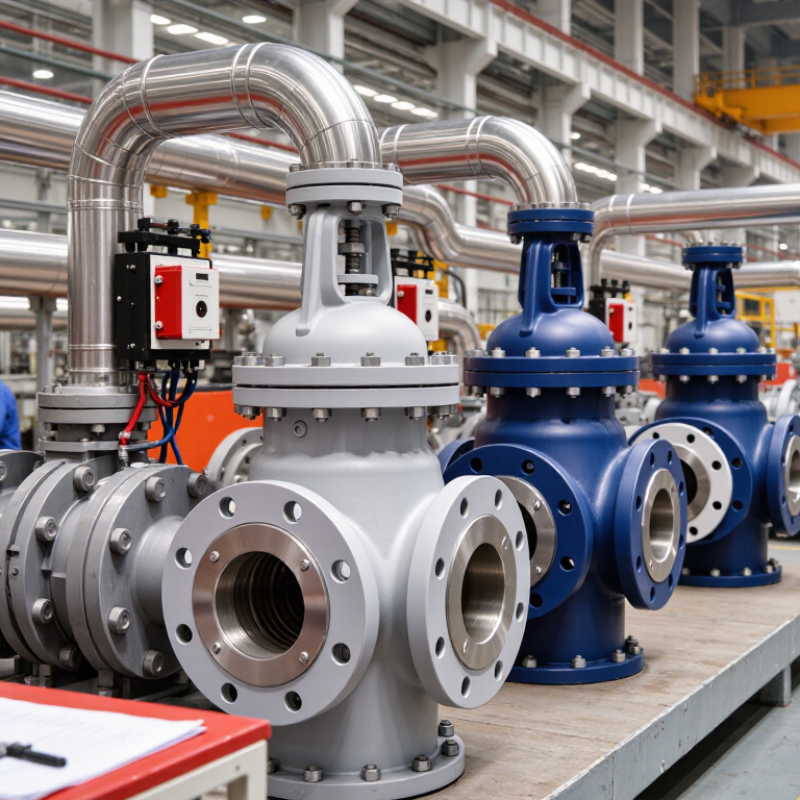
China Best Emergency Shutdown Actuator Manufacturers?

What Defines an Emergency Shutdown Actuator? IEC 61508 SIL 2–3

An emergency shutdown actuator is the final mechanical element that moves a valve to a safe position after a critical signal. It is not merely a fast electric or pneumatic motor. The complete safety function includes sensors, logic solvers, solenoid valves, actuators, and valves.

IEC 61508-1:2010 defines SIL 2 as a low-demand PFDavg of 10⁻³ to below 10⁻². SIL 3 requires 10⁻⁴ to below 10⁻³. These figures describe risk reduction, not actuator quality alone. A qualified manufacturer should provide failure-rate data, diagnostic coverage, proof-test intervals, and FMEDA evidence. Look for traceable test records.

Field details matter. During a shutdown test, the actuator should reach its fail-safe position despite low instrument air, power loss, or a broken control signal. IEC 61511 also requires lifecycle management, documented proof testing, and independence from basic process control. Supplier audits should examine response time, spring performance, enclosure protection, and partial-stroke testing.

A hard truth remains. SIL certificates can look impressive while application assumptions stay unclear. That deserves scrutiny. The best manufacturers explain boundary conditions, not just quote SIL 3. Industry safety reviews repeatedly show that maintenance, testing, and bypass management influence real protection performance. Procurement teams should therefore compare verified PFDavg calculations with site conditions, rather than selecting by price or delivery speed.

Emergency Shutdown Actuator Performance Targets — IEC 61508 SIL 2–3

An emergency shutdown actuator is the final element that drives a process to its defined safe state when a dangerous condition is detected. Under IEC 61508 low-demand operation, SIL 2 corresponds to a probability of failure on demand average (PFDavg) from 10−3 to less than 10−2, while SIL 3 corresponds to 10−4 to less than 10−3. SIL applies to the complete safety function, not to the actuator alone.

How ESD Actuators Achieve Fail-Safe Closure in 0.5–2 Seconds

Emergency shutdown actuators protect process equipment by forcing a valve to its safe position during a critical event. In many pneumatic designs, a de-energized solenoid vents the actuator chamber. The stored spring force then closes the valve. Typical closure targets range from 0.5 to 2 seconds, but actual timing depends on valve size, air volume, tubing length, exhaust capacity, and spring torque.

IEC 61511 requires the shutdown response time to remain shorter than the process safety time. OREDA reliability data also shows that failure rates vary with service conditions, maintenance quality, and equipment design. For this reason, manufacturers in China should demonstrate timed factory acceptance tests, not only provide catalog figures. Test records should show opening pressure, closing time, final travel, and fail-position accuracy. Small details matter.

A volume booster can shorten exhaust time. A local accumulator can preserve movement during air loss. Solenoid selection, however, must match the required safety integrity level and environmental rating. SIL calculations often use dangerous-undetected failure rates near 10⁻⁶ to 10⁻⁵ per hour for qualified shutdown components, according to published safety-equipment reliability handbooks. These figures are not universal. Field conditions can be harsher.

I would also question any claimed 0.5-second result without pipe-length data. Real plants are less tidy. Dust, cold weather, sticky valve stems, and weak springs can quietly add delay. Partial-stroke testing and periodic full-stroke tests reveal those imperfections before an emergency demands instant closure.

China’s Leading ESD Actuator Manufacturers: API 6FA and ISO 5211

China’s leading ESD actuator manufacturers support critical shutdown systems for oil, gas, chemical, and process facilities. Their designs commonly follow ISO 5211 mounting dimensions, allowing accurate actuator-to-valve alignment and easier maintenance. However, ISO 5211 confirms interface compatibility, not complete emergency performance.

For fire-risk service, buyers should verify the valve assembly’s API 6FA fire-test evidence. The actuator package must also maintain the required fail-close or fail-open action after signal loss. Experienced manufacturers provide torque calculations, spring-return data, cycle testing, and material records. Pneumatic actuators remain popular because they deliver fast movement and simple emergency operation. Hydraulic and electric options may suit special site conditions. Selection should reflect actual valve breakaway torque, temperature, pressure, and available utilities. A polished datasheet is not enough.

Tips: Request certified ISO 5211 dimensions and clear API 6FA documentation. Check whether testing covers the complete valve assembly. Confirm corrosion protection for humid coastal storage. Ask for witness-test procedures, spare-part lists, and actuator response times. Do not accept “fire safe” as a vague promise. In practice, no selection is perfect. A small torque mistake can delay shutdown or damage the valve. Final approval should include engineering review, site conditions, and realistic maintenance access.

How to Compare Suppliers: IP66/IP67, ATEX, IECEx, and 10,000 Cycles

When comparing emergency shutdown actuator suppliers, begin with the enclosure, not the brochure. IEC 60529 defines IP66 as dust-tight protection against powerful water jets. IP67 adds temporary immersion protection, typically up to one metre for 30 minutes. These ratings are not interchangeable. A field technician may face washdown, condensation, or damaged cable glands. Ask for the complete actuator assembly test, including connectors and entry points.

Certification requires closer inspection. ATEX Directive 2014/34/EU and IECEx rules apply to the certified configuration, temperature class, gas or dust group, and installation conditions. Request the certificate number, marking, production quality records, and current certificate status. IEC 61511 also treats emergency shutdown functions as part of a safety lifecycle, so response time, fail position, diagnostic coverage, and proof-test procedures deserve written evidence. A logo on a datasheet is not enough.

The 10,000-cycle claim needs practical context. It should identify load, stroke angle, torque, speed, ambient temperature, and failure criteria. IEC 61508 does not automatically require 10,000 mechanical cycles. That number is usually a supplier endurance target, not a universal compliance threshold. Ask for witnessed test data and maintenance intervals. I would also compare cold-start performance and manual override effort. Small details matter. A test report can still hide an unrealistic duty cycle. Supplier evaluation should combine certification evidence, repeatable testing, service experience, and transparent limitations.

China Best Emergency Shutdown Actuator Manufacturers? - How to Compare Suppliers: IP66/IP67, ATEX, IECEx, and 10,000 Cycles

Evaluation Dimension Recommended Acceptance Benchmark What the Requirement Means Supplier Evidence to Request Comparison Priority
Emergency Shutdown Function Fail-safe action on loss of power, control signal, or defined emergency command The actuator should move the valve to the specified safe position, such as fail-close or fail-open, under the stated operating conditions. Functional test procedure, cause-and-effect diagram, failure-mode description, and witnessed shutdown test records Critical
Ingress Protection IP66 for dust-tight protection and protection against powerful water jets; IP67 where temporary immersion protection is required Under IEC 60529, IP6X indicates dust-tight protection. IPX6 covers powerful water jets, while IPX7 covers temporary immersion in water up to 1 m for 30 minutes under the test conditions. IP test certificate or laboratory report identifying the exact actuator enclosure and test configuration Critical
ATEX Compliance ATEX certification matching the intended equipment group, category, zone, gas or dust atmosphere, and temperature class ATEX conformity is application-specific. The marking must be suitable for the hazardous area and the actuator’s electrical and non-electrical ignition risks. EU Declaration of Conformity, certificate number, product marking, technical file references where applicable, and installation limitations Critical
IECEx Compliance A valid IECEx certificate of conformity with protection concept, EPL, gas or dust group, and temperature classification suitable for the site IECEx certification provides an internationally recognized conformity route for equipment intended for explosive atmospheres; the certificate scope must match the supplied configuration. IECEx online certificate record, certificate of conformity, product marking, and special conditions of use Critical
Mechanical Endurance At least 10,000 complete operating cycles at the specified torque, speed, duty, ambient temperature, and load profile A cycle must be clearly defined, normally as one complete movement from one end position to the other and back. Cycle count alone is not sufficient without test conditions. Endurance test report showing cycle definition, torque curve, load, power supply, temperature, failure criteria, and final inspection Critical
Torque and Thrust Capacity Rated output must exceed the valve’s maximum breakaway, running, and seating torque or thrust with an engineering margin The actuator must be sized for the actual valve, differential pressure, temperature, process medium, and emergency operating direction. Certified torque or thrust curves, valve sizing sheet, actuator datasheet, and coupling dimensions Critical
Emergency Closing or Opening Time Guaranteed response time under minimum and maximum design loads, including the defined safe travel direction The stated time should cover the complete required travel and should be verified at actual operating torque, voltage, pressure, and temperature limits. Factory acceptance test results, timing graph, operating envelope, and low-voltage or low-pressure performance data High
Power Supply and Fail-Safe System Clearly defined voltage range, power-loss behavior, stored-energy capacity, and manual override procedure Emergency shutdown performance may depend on a spring-return mechanism, accumulator, capacitor, or other stored-energy device. The available energy must be verified. Wiring diagram, fail-action test, battery or accumulator specification where applicable, and manual override risk assessment Critical
Position Feedback Independent open, closed, intermediate-position, and fault feedback where required by the safety system Feedback should allow the control system to confirm that the valve reached the commanded safe position rather than only confirming an electrical command. Terminal schedule, limit-switch rating, feedback logic, calibration record, and loop test report High
Environmental Operating Range Temperature, humidity, corrosion resistance, vibration, and altitude ratings must cover the installation site Environmental ratings apply to the complete supplied configuration, including solenoids, switches, connectors, cable glands, and coatings. Environmental datasheet, vibration and temperature test records, coating specification, and material certificates High
Electrical and EMC Performance Documented insulation, dielectric, grounding, surge, and electromagnetic compatibility test results applicable to the final configuration Electrical performance should remain reliable during switching, cable faults, transients, and nearby industrial electrical activity. Routine test report, type-test report, EMC declaration or laboratory report, and wiring termination instructions High
Quality Control and Traceability 100% functional testing before shipment and traceability from serial number to components, inspection results, and final test data Traceability reduces the risk of undocumented substitutions and makes warranty investigation and safety-critical maintenance more reliable. Quality plan, inspection and test plan, calibration certificates, serial-number records, and nonconformance procedure Medium
Documentation and Certification Match All certificates, datasheets, drawings, and manuals must identify the same model, options, enclosure, and hazardous-area configuration being quoted A certificate for a base model may not automatically cover additional switches, solenoids, positioners, heaters, or alternative cable entries. Document register, approved drawings, certificate schedule, product label photographs, and revision-controlled manuals High
After-Sales Support and Spare Parts Defined warranty, spare-parts list, repair process, technical response time, and support for commissioning and maintenance Emergency shutdown equipment requires maintainable components and clear procedures for testing without compromising plant safety. Warranty terms, recommended spare-parts list, maintenance schedule, troubleshooting guide, and service-level commitment Medium
Factory Acceptance Testing FAT covering direction of rotation, travel limits, torque or thrust, emergency action, response time, feedback, and enclosure integrity checks Testing should be performed on the actual build or an identically configured unit, not only on a generic actuator model. FAT procedure, signed test sheet, calibration records, photographs, punch-list closure, and customer witness option High
Note: IP66 and IP67 are enclosure protection ratings under IEC 60529. IP67 does not automatically imply IP66; require both ratings when protection against powerful water jets and temporary immersion are each part of the application. ATEX and IECEx markings must be checked against the actual hazardous-area classification and the complete actuator configuration. A 10,000-cycle claim is meaningful only when the torque, load, temperature, duty, travel, and test method are documented.

Which Chinese ESD Actuator Fits Your Valve, Torque, and SIL Rating?

Choosing among Chinese emergency shutdown actuator manufacturers starts with the valve, not the catalog. Confirm valve type, shaft size, operating angle, and maximum breakaway torque. Add a realistic safety margin, often 25–30%, after reviewing friction and process pressure. Do not size only from running torque. It can stall. Decide whether the process needs fail-close, fail-open, or fail-in-place action. Pneumatic spring-return actuators suit rapid trips, while electric units help where instrument air is unavailable.

SIL selection requires more than a certificate. Ask for functional safety documentation, failure-rate data, diagnostic coverage, proof-test intervals, and independent assessment. Check whether the stated SIL applies to the complete safety function or only the actuator subsystem. This distinction matters. A SIL 3-rated component cannot automatically create a SIL 3 loop. Match response time to the valve stroke and process risk assessment. Request test records at the required torque, voltage, air pressure, and temperature.

Experienced buyers also inspect manufacturing controls. Look for serialized parts, calibration records, enclosure tests, corrosion protection, and documented FAT procedures. Confirm actuator output during supply loss and low air pressure. Ask for spare seals and local service capability. Quality can vary between production batches. I would not rely on polished brochures alone. Visit the factory when practical, review nonconformance records, and trial one complete assembly before volume purchasing. Record the observed stroke time, torque, and fail position during the trial.

FAQS

How does a pneumatic shutdown actuator close a valve during an emergency?

A de-energized solenoid vents the actuator chamber. Stored spring force then drives the valve toward its safe position. Fast and forceful.

Why does closure usually take 0.5 to 2 seconds?

Timing depends on valve size, air volume, tubing length, exhaust capacity, and spring torque. Actual results vary.

What response-time limit should engineers check?

The shutdown response must remain shorter than the process safety time. A fast valve is not automatically safe. The margin matters.

What should a factory acceptance test record?

Records should show opening pressure, closing time, final travel, and fail-position accuracy. Pipe length should also be documented. Small details matter.

Can an actuator really close in 0.5 seconds?

Possibly, but the claim needs evidence. Dust, cold weather, sticky stems, weak springs, and long tubing can add delay. I would question unsupported figures.

How can designers shorten actuator exhaust time?

A volume booster can release air faster. A local accumulator can preserve movement during air loss. Both require proper sizing. Improvement is not guaranteed.

What should engineers check when selecting the solenoid?

The solenoid must match the required safety integrity level and environmental rating. Its certified configuration must fit the installation. A datasheet logo is not enough.

What is the difference between IP66 and IP67 protection?

IP66 protects against dust and powerful water jets. IP67 adds temporary immersion protection, usually up to one metre for 30 minutes. They are not interchangeable.

Does a 10,000-cycle claim prove long service life?

Not by itself. The test should identify load, stroke angle, torque, speed, temperature, and failure criteria. The duty cycle may be unrealistic.

Which tests help reveal hidden shutdown problems?

Partial-stroke testing and periodic full-stroke tests can expose delays before an emergency. Cold-start checks and manual override tests also help. Real plants are messy.

Conclusion

An Emergency Shutdown Actuator is a critical safety device designed to move a valve to a secure position when hazardous conditions, control-system failures, or emergency signals occur. This article explains how actuators aligned with IEC 61508 SIL 2–3 requirements support dependable protection and how fail-safe mechanisms can achieve valve closure within approximately 0.5–2 seconds. It also outlines key considerations for selecting Chinese manufacturers, including API 6FA performance, ISO 5211 mounting compatibility, and proven reliability in demanding industrial applications.

The comparison process focuses on practical specifications such as IP66/IP67 enclosure protection, ATEX and IECEx suitability, operating torque, valve type, response speed, and endurance of up to 10,000 cycles. By matching these factors with the valve’s size, required safety integrity level, and operating environment, users can identify an actuator that provides rapid emergency response, stable operation, straightforward installation, and long-term safety performance.

Madeline

Madeline

Madeline is a dedicated marketing professional with a wealth of expertise in our company's core offerings. With a keen understanding of the industry, she brings a unique perspective to her role, consistently delivering high-quality content that highlights the superior aspects of our products. As......